Follow us
Ubumwe 2.0: Integrating Arts Education and Psychosocial Support is an innovative education initiative designed to support children and youth affected by displacement in Uganda. The project uses culturally relevant, arts-based learning approaches to enhance both education and well-being, and it is funded by Columbia University. It builds on a successful 2023 pilot implemented in Kyangwali Refugee Settlement, where an integrated arts curriculum was developed and tested in a community school. The name “Ubumwe,” a Kinyabwisha word meaning togetherness, reflects the project’s belief that healing, learning, and growth are strengthened through shared and collective experiences.
The project is grounded in the urgent need to address both educational disruptions and psychosocial challenges faced by displaced children and youth. Displacement often interrupts schooling and negatively impacts emotional well-being, making it difficult for learners to fully engage in education. Ubumwe 2.0 responds to this challenge by combining arts education with psychosocial support, creating a holistic approach that not only improves learning outcomes but also promotes healing, resilience, and social cohesion among learners from both refugee and host communities.
The main objective of Ubumwe 2.0 is to enhance education and well-being for displacement-affected learners through the integration of arts and psychosocial support. Specifically, the project aims to improve learning outcomes, strengthen mental health and emotional resilience, build teachers’ capacity in creative and trauma-informed teaching methods, and promote social cohesion between refugee and host community learners. Additionally, the project seeks to contribute to the development of scalable and sustainable education models that can be applied in other humanitarian contexts.
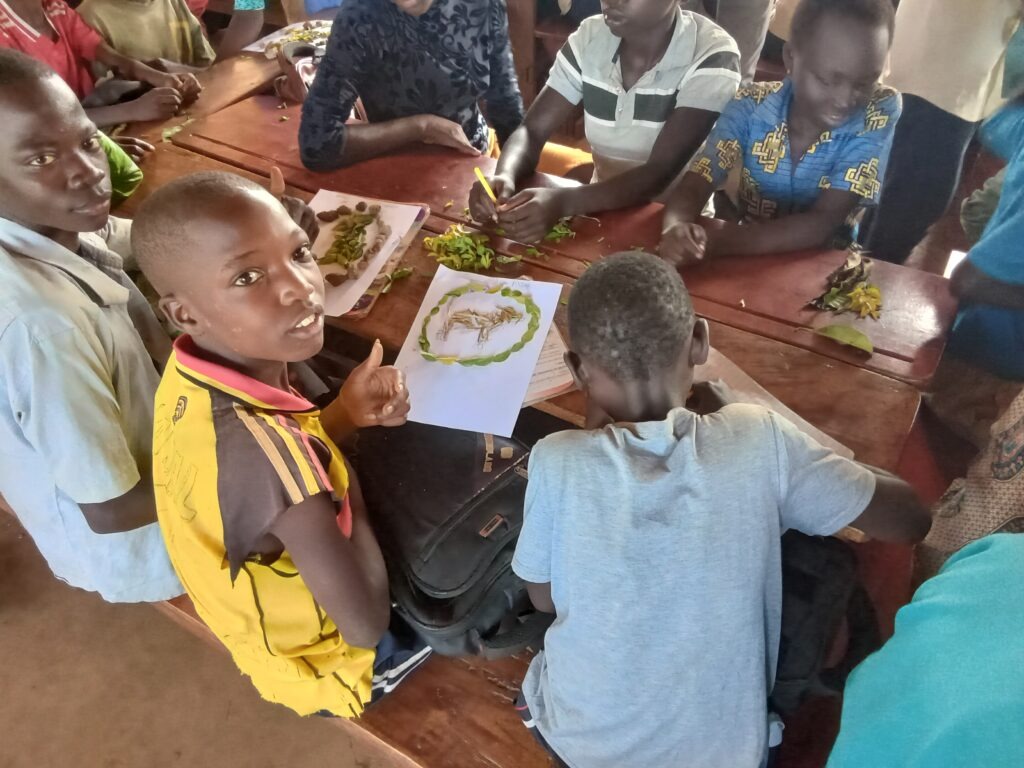
The project implements a comprehensive range of activities to achieve its goals. These include the development and refinement of an arts-based curriculum tailored to the needs of learners in displacement contexts, as well as training teachers and school leaders in creative, participatory, and trauma-informed teaching approaches. The program delivers arts-integrated lessons in selected primary schools and promotes collaboration with national education authorities. It also fosters partnerships between local and international educators, artists, and researchers. Continuous monitoring, evaluation, and learning are carried out to assess impact and improve implementation, while advocacy and knowledge sharing are emphasized to promote the integration of arts into broader education systems.
Ubumwe 2.0 primarily benefits children and youth affected by displacement, including both refugees and host community learners. It also supports teachers and school leaders in participating schools by equipping them with new skills and approaches. Beyond direct beneficiaries, the project engages a wider network of stakeholders such as curriculum developers, local artists, mental health practitioners, and school communities, ensuring a broader and more sustainable impact.
The project is implemented in Kyangwali Refugee Settlement in southwestern Uganda. It specifically focuses on Maratatu, Kentomi, and Rwemisanga Primary Schools, as well as their surrounding communities. These areas were selected based on the needs of displacement-affected populations and the potential for meaningful community engagement.
Through its integrated approach, Ubumwe 2.0 is expected to improve learning outcomes among participating learners while also strengthening their mental health and psychosocial well-being. The project aims to foster stronger social cohesion between refugee and host community children, creating more inclusive learning environments. It also seeks to enhance teachers’ capacity and resilience through arts-based and trauma-informed practices. In the long term, the project contributes to the development of scalable and sustainable education models and advances global understanding of the role of arts education in humanitarian and displacement settings.