Follow us
The TOGETHER Project (Towards Greater Effectiveness and Timely Humanitarian Education Response) is funded by the European Union Humanitarian Aid and implemented through a consortium led by Finn Church Aid (FCA) in partnership with HAF Uganda, Cheshire Services Uganda, PALM Corps, and Forum for Education NGOs.
The project is designed to improve access to quality, inclusive, and protective education for refugee and host community children affected by conflict and displacement. It responds to persistent barriers such as low enrolment, poor retention, limited transition opportunities, and gaps in child protection systems. By integrating education with psychosocial support and safeguarding mechanisms, the project ensures that learning environments are safe, inclusive, and responsive to children’s needs.
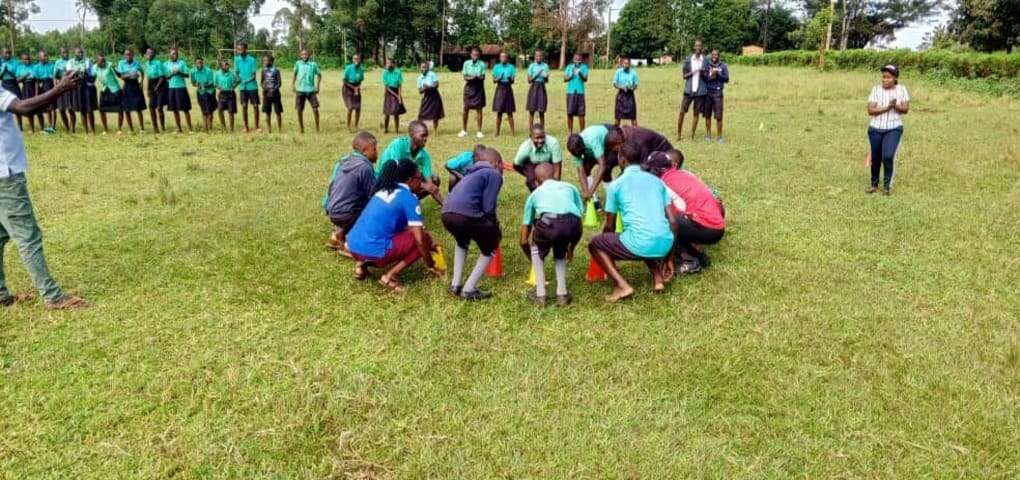
The TOGETHER Project implements a range of integrated activities to improve access to inclusive and protective education for children affected by displacement. These include supporting enrolment, retention, and transition in both formal and non-formal education, including Accelerated Education Programmes (AEP). The project also delivers psychosocial support through structured approaches such as TeamUp and Flying Colours sessions, while strengthening child protection and safeguarding systems. Additional efforts focus on improving case management and referral pathways, promoting girl child empowerment, and building the capacity of teachers and education stakeholders to provide safe and inclusive learning environments.
The project directly benefits over 50,000 children, including refugees, asylum seekers, and vulnerable host community learners across primary, secondary, and accelerated education programmes. It also supports teachers, school leaders, parents, caregivers, and community structures. Implementation spans multiple refugee-hosting areas in Uganda, including Palorinya, Rhino Camp, Palabek, and Kiryandongo refugee settlements.
Through these interventions, the project aims to increase enrolment, retention, and transition in education while improving the quality and safety of learning environments. It also seeks to strengthen children’s psychosocial well-being and resilience, enhance child protection systems, empower girls to participate fully in education, and build the capacity of education systems to effectively respond to humanitarian needs.