Follow us
The Education Cannot Wait (ECW) Project is a global initiative committed to ensuring that children and youth affected by crises—such as conflict, displacement, and natural disasters—have access to safe, inclusive, and quality education. In Uganda, the project focuses on supporting both refugee and host community learners by addressing key barriers to education while promoting not only academic achievement but also psychosocial well-being. The initiative recognizes that education in emergency contexts must go beyond classroom instruction to support the overall development and protection of learners.
The project is based on the understanding that crises significantly disrupt education systems and limit children’s ability to learn and thrive. Refugee and vulnerable host community learners often face challenges such as limited access to schools, inadequate learning materials, overcrowded classrooms, and emotional distress caused by displacement and instability. The ECW Project responds to these challenges by providing integrated support that combines access to education, improved teaching quality, and psychosocial care, ensuring that learners are able to continue their education in a supportive and protective environment.
The main objective of the ECW Project is to ensure equitable access to quality education for crisis-affected children and youth. It aims to improve learning outcomes, increase school enrollment, retention, and completion rates, and enhance the psychosocial well-being and resilience of learners. Additionally, the project seeks to strengthen the capacity of teachers and education systems to respond effectively to the needs of learners in humanitarian settings.
The project implements a wide range of integrated activities designed to address both educational and psychosocial needs. These include supporting school enrollment and retention, improving the quality of teaching through continuous professional development for teachers, and providing psychosocial support to learners. The project also facilitates the provision of teaching and learning materials, promotes the establishment of safe and inclusive learning spaces, and encourages community engagement to strengthen child protection and participation in education.
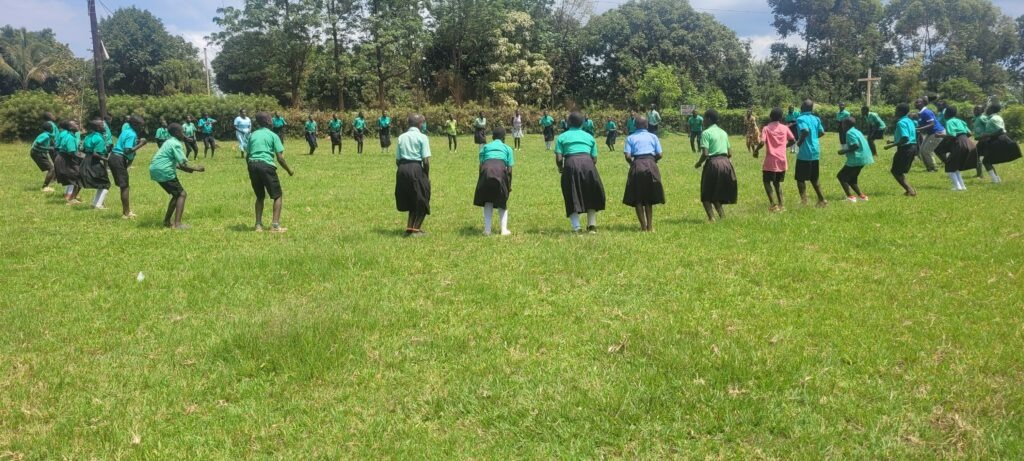
In Kyangwali Refugee Settlement in South-Western Uganda, HAF Uganda, with support from Street Child, leads the delivery of psychosocial support through the TeamUp intervention. This intervention is implemented in Bugoma, Rwemisanga, Maratatu, Kentomi, and Kinakyeitaka Primary Schools, focusing on structured play and movement-based activities that support children’s emotional and social development.
The ECW Project primarily benefits refugee children and youth, as well as vulnerable learners from host communities. It also supports teachers, school leaders, and other education stakeholders by enhancing their capacity to provide quality and inclusive education. Through its broader engagement, the project reaches families and communities, promoting a supportive environment for children’s learning and well-being.
The project is implemented in Kyangwali Refugee Settlement in South-Western Uganda. Specific focus is placed on Bugoma, Rwemisanga, Maratatu, Kentomi, and Kinakyeitaka Primary Schools, along with their surrounding communities. These areas are prioritized due to the high concentration of refugee and vulnerable host community populations.
Through its integrated approach, the ECW Project aims to improve learning outcomes and ensure that more children stay in school and complete their education. It seeks to strengthen learners’ psychosocial well-being and resilience, enabling them to cope with the challenges of displacement and crisis. At the system level, the project contributes to building a more inclusive, responsive, and resilient education system that can effectively address the needs of children in humanitarian contexts.